
Revision Planning Suite
Empowering GCSE students to take control of their exam preparation through personalised planning and confidence tracking.
34,000+ revision sessions planned in 2025 | Built from student feedback
Starting with Student Voices
This project began with students directly telling us what they needed—a clear example of user-driven design.
What Students Told Us: "I don't know where to start with my revision" - "I forget which topics I'm confident with and which I'm not" - "I need to see all my subjects in one place" - "I want to plan ahead but don't know how much time to give each topic"
Research Approach: Analysed user feedback and support requests to identify patterns - Interviewed 12 students about their current revision planning methods - Observed how students were using (and misusing) existing tools as makeshift planners - Mapped student mental models: How do they naturally think about planning?
Key Insight: Students didn't need a complex project management tool—they needed a simple way to commit to revision sessions and track how confident they felt. The act of planning itself built accountability and reduced overwhelm.
Design Process
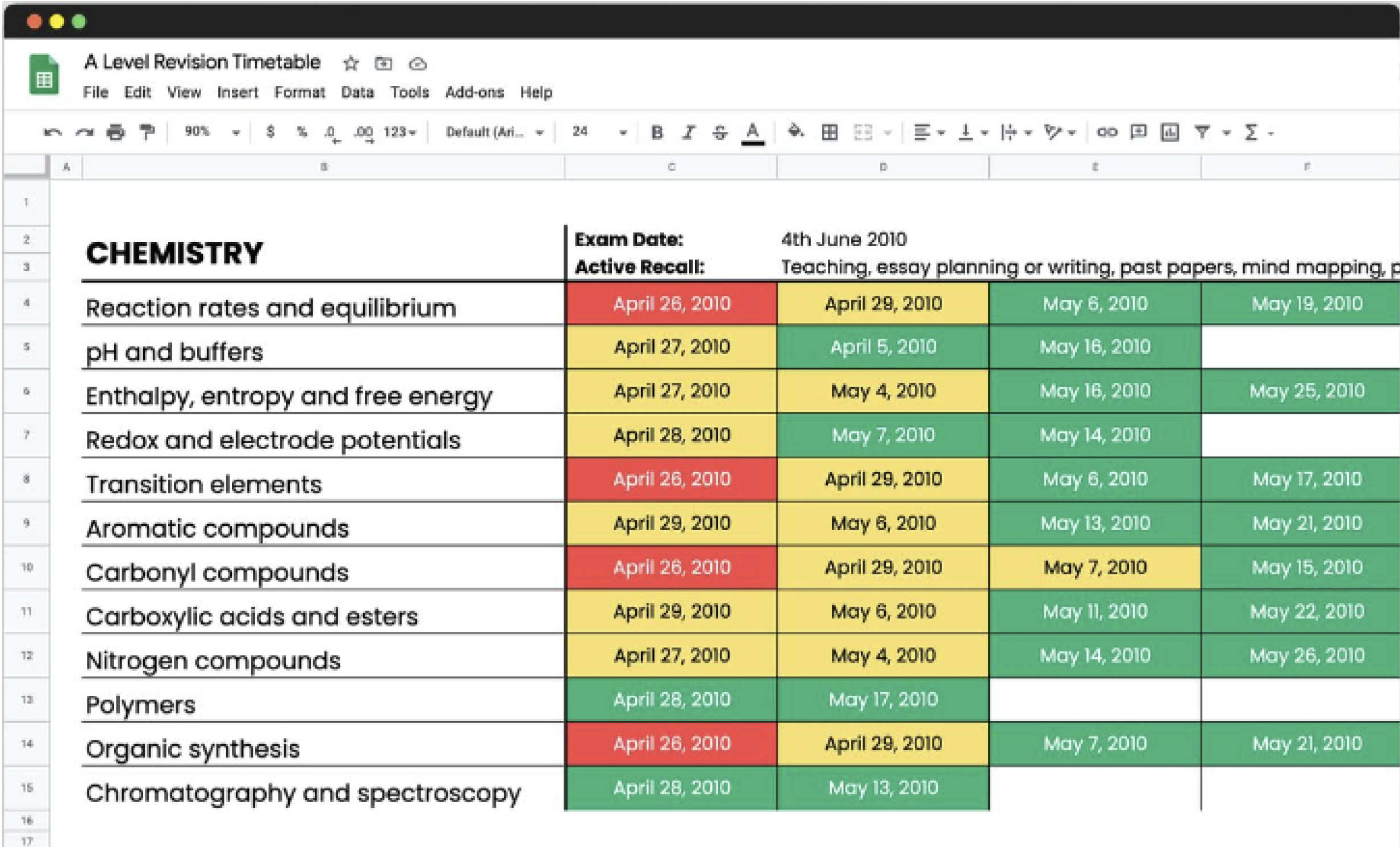
Understanding Student Planning Behaviour: I mapped how students currently planned revision (sticky notes, paper planners, phone reminders) and designed digital equivalents that felt familiar, not foreign.
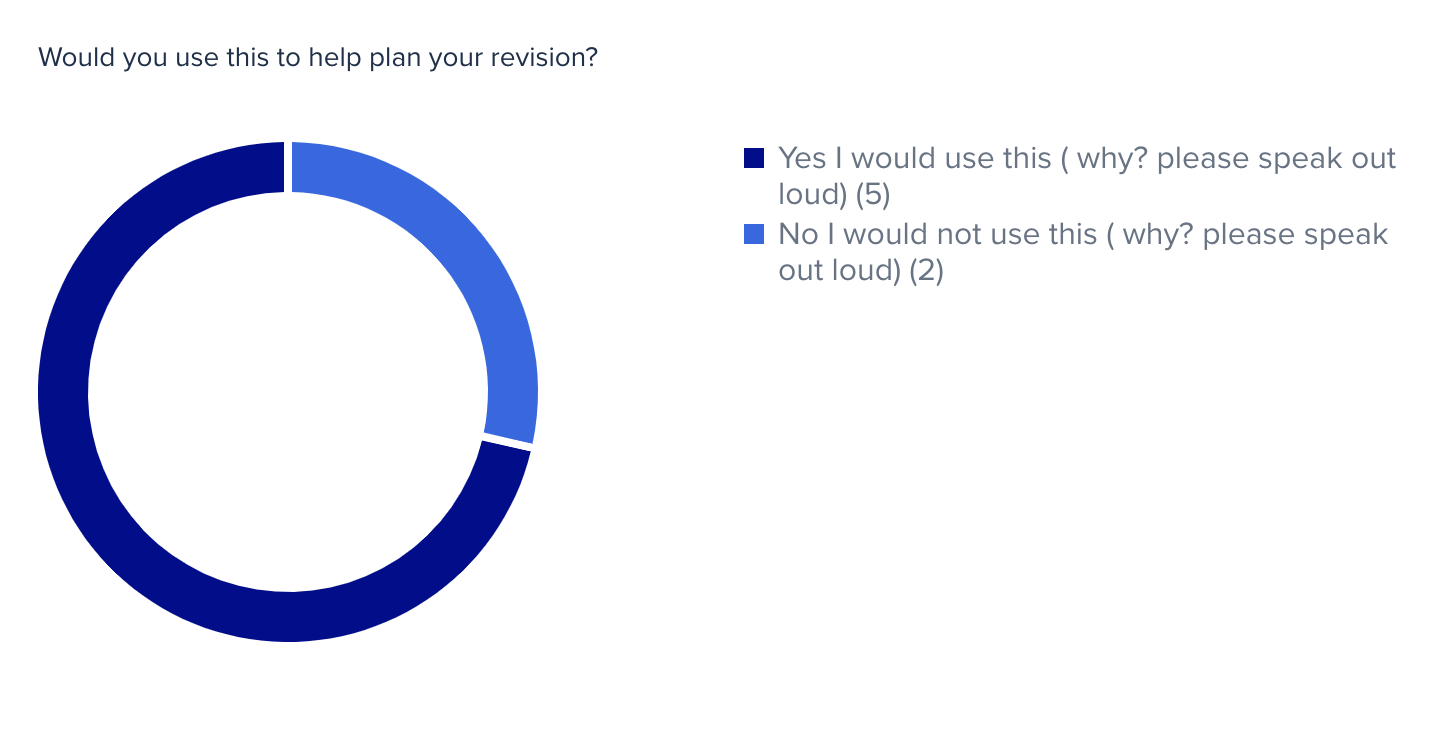
Student Feedback → Design: This project started with students directly requesting planning tools. I analysed their feedback patterns and interviewed students about how they currently planned revision.
Key Insight: Students felt overwhelmed without structure. They needed to see their revision plan visually and track which topics they felt confident about.
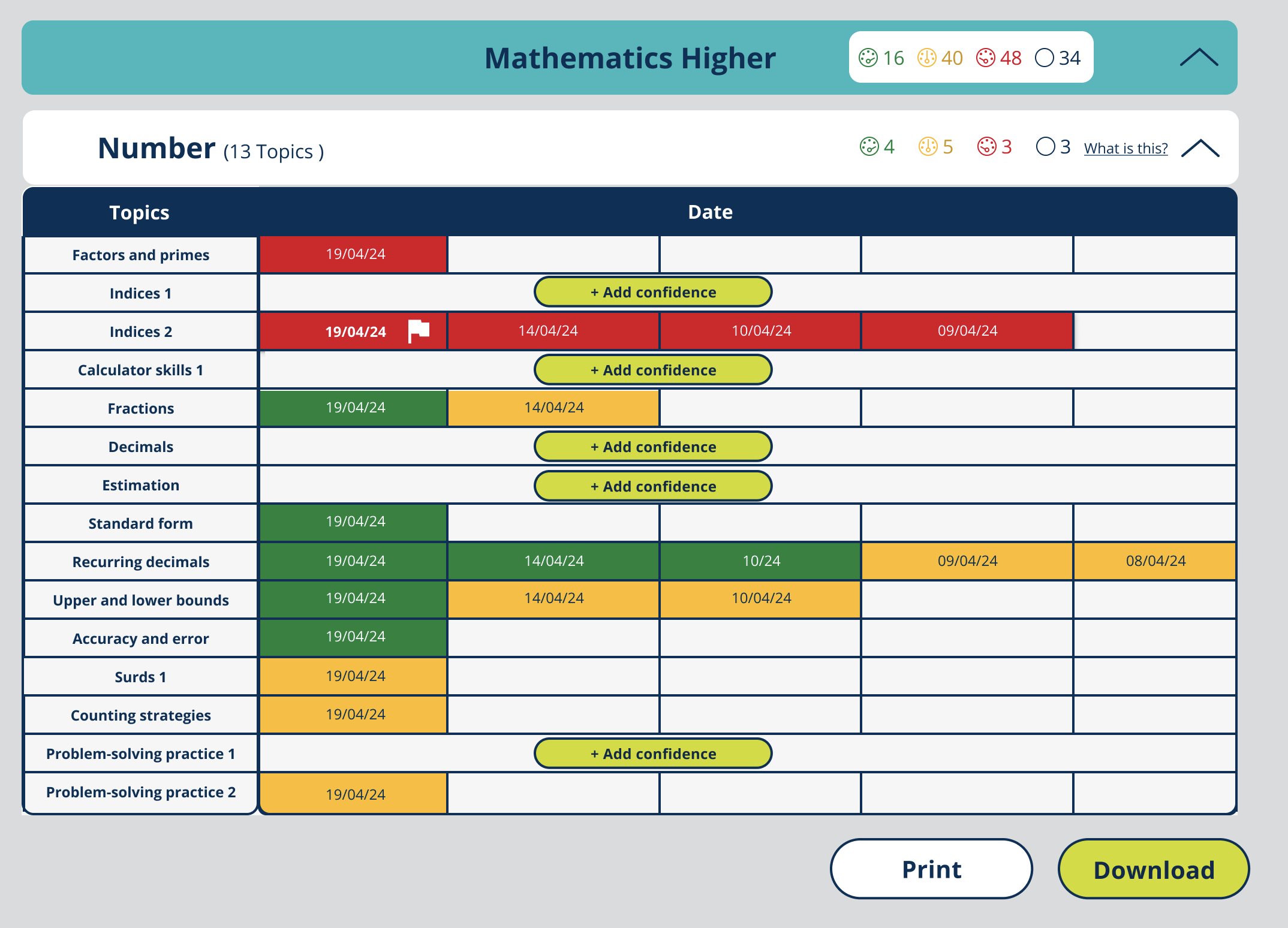
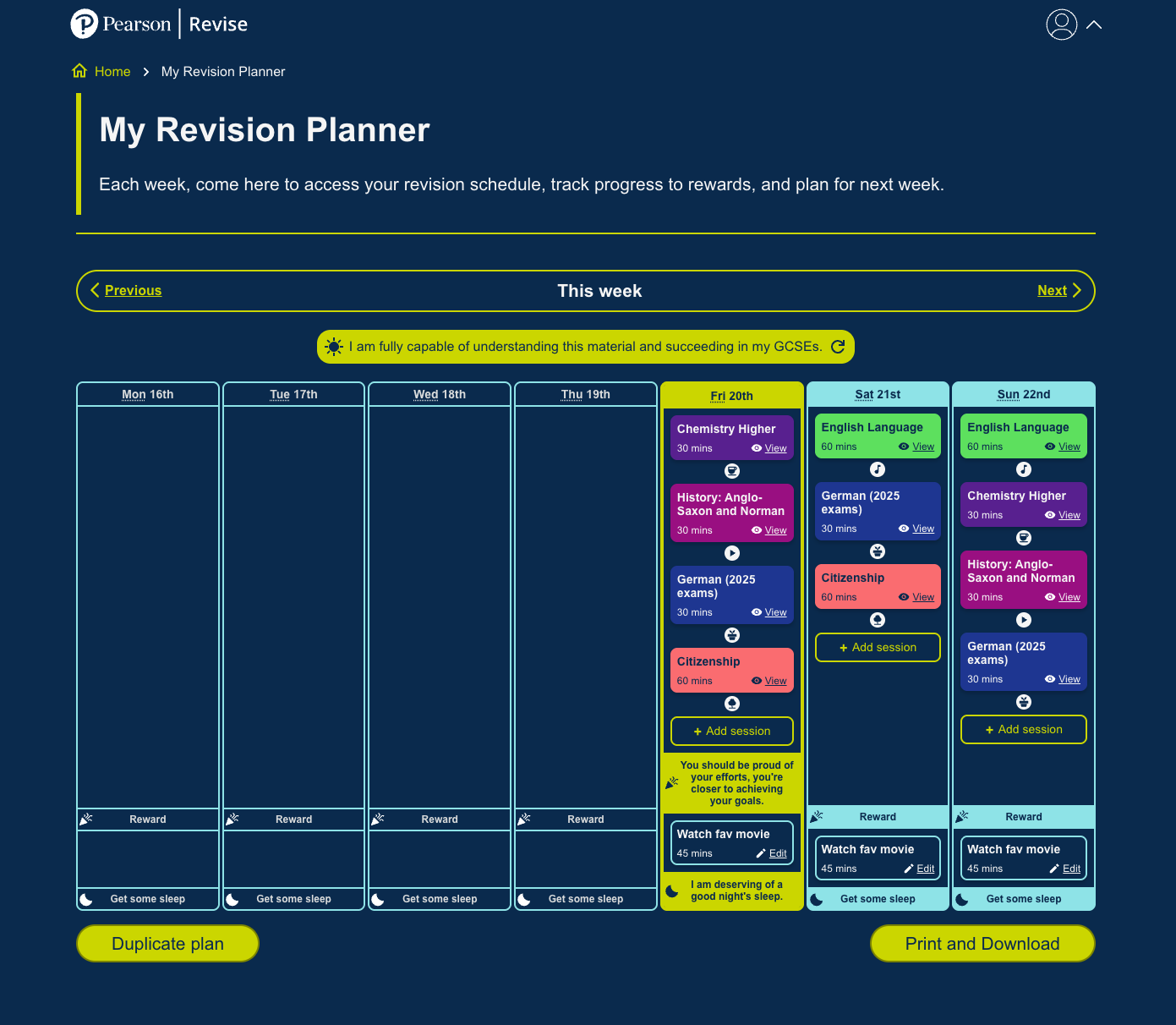
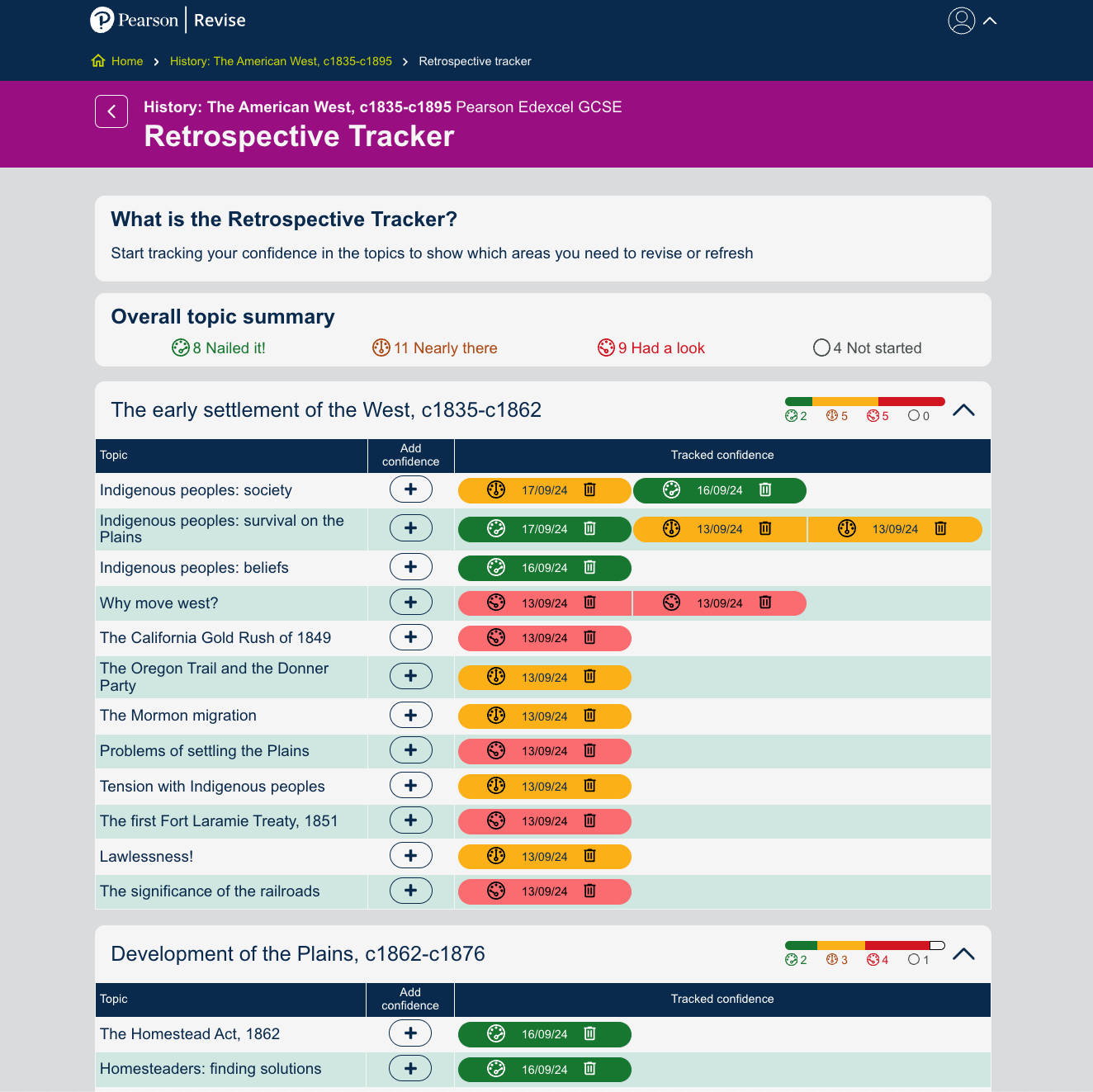
Design Decisions: Calendar-style planner so students see their week at a glance, not buried in lists Confidence rating system integrated with planning—students rate topics after revising, creating a feedback loop that shows what needs more focus Simple, fast interaction—add a revision session in seconds, not minutes.
Iteration Based on Testing:
Made confidence ratings optional after feedback that some found it stressful
Simplified interface—students said v1 felt "too busy"
Added visual balance check so students could see if they were neglecting subjects
The Solution
A revision planning tool built directly from student requests, helping them organize exam prep and track confidence.
Core Features:
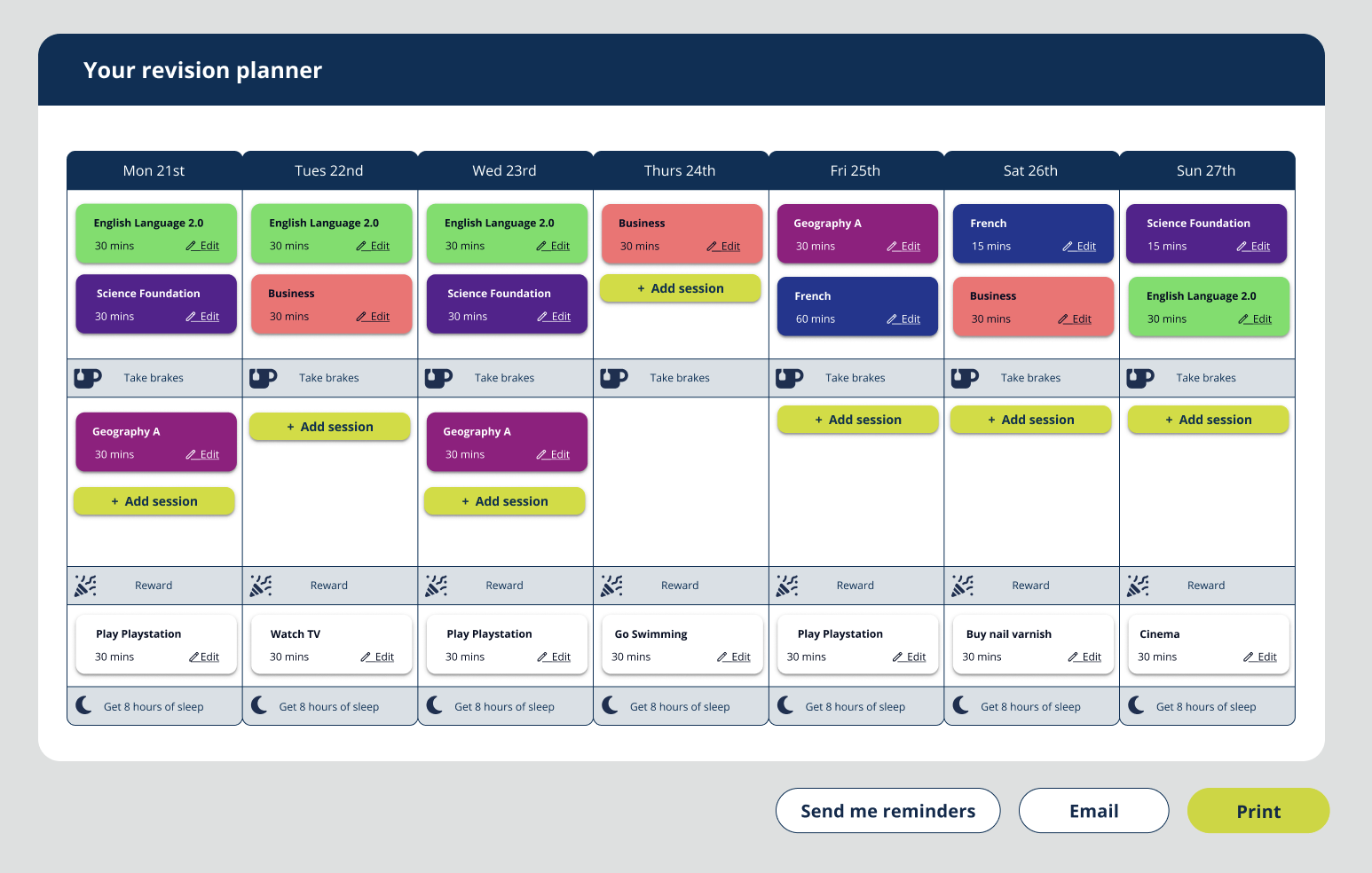
Revision Planner: Students plan revision sessions across subjects and topics. Visual layout shows their week at a glance.
Confidence Tracking: Rate confidence after each session. Students see which topics need more attention—turning "I should revise more" into "I'm weak on Biology Unit 3."
Design Decisions:
Simple over complex: students needed clarity, not features
Visual calendar view: see the whole week, spot gaps
Optional confidence ratings: some students found it helpful, others stressful—made it their choice
Results & Impact
Adoption shown through 34,000+ revision sessions planned in 2025. Strong, sustained usage proving we solved a real student need.
Student Response: Built from direct student feedback—students told us what they needed, and we delivered it
Product Impact: Integrated confidence tracking created a feedback loop: students now see which topics need more attention instead of guessing where to focus their revision
Business Value: Addressed top user request, increasing platform stickiness and student engagement without requiring teacher intervention
Reflections
What Worked: Starting with direct user feedback rather than assumptions. Students told us exactly what they needed—we just had to listen and design a solution that fit their mental models.
Key Learning: Simple wins. Students didn't need sophisticated features—they needed a clear, fast way to plan and track confidence. Every iteration that removed complexity performed better than ones that added features.
Impact on Design Approach: This project reinforced the value of user-driven design. The 34,000 sessions weren't because we built something clever—they happened because we solved a problem students actually had.